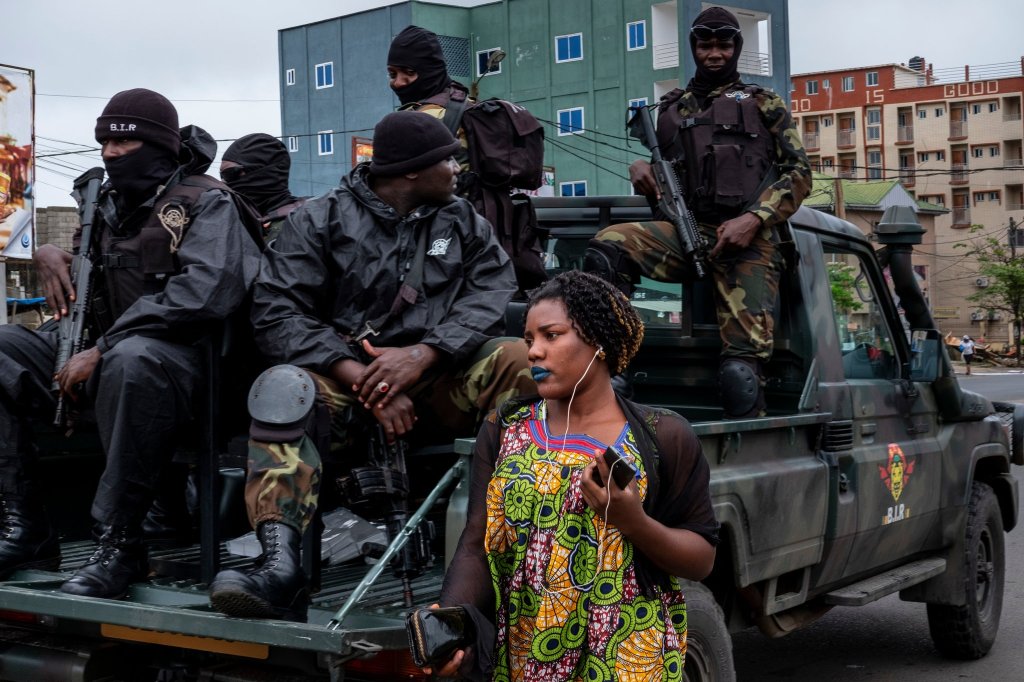
Cameroon is currently in the midst of a civil war. The Anglophone Crisis is also known as the Ambazonia War or the Cameroonian Civil War began in September of 2017 and is continuing as of 2021.
The war is between the centralized Cameroonian government and the separatist of the Anglophone territories which is made up of Cameroon’s northwest and southwest regions (collectively recognized as Southern Cameroon). The conflict began as a small insurgency but soon rose to the scale of a full-blown war as rebellion quickly spread across the Anglophone territory.
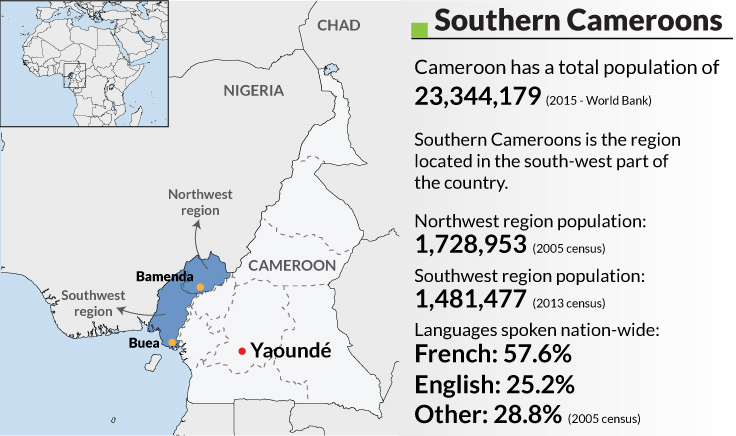
The motivation for the civil war began soon after Southern Cameroon became a part of Cameroon in 1961. The primarily English-speaking Southern Cameroon already had an established government along with its own prime minister when it was forced to Cameroon.
The primarily French-speaking Cameroonian government feared the established autonomy of Southern Cameroon; believing if they ever tried to secede the union, they would take a great portion of Cameroon’s resources with them.
In order to prevent this in the unilateral referendum of 1970, the Cameroonian government replaced the federal state with a unitary one giving more power to the centralized government. In this process, Southern Cameroon lost its autonomy and with it much of its previously established rights, and this was the only the beginning of the massive changes made to force the unification.
In 2016 the Cameroon Anglophone Civil Society Consortium protested in opposition to the current civil law system. As the protest grew the Cameroonian government deployed security forces to squander the protest, in the raid more than 100 protestors were arrested and six were reportedly killed. This event began the insurgency that would go on to develop into a civil war.
As of 2021 the Anglophone Crisis has reportedly taken the lives of over 4,000 people, and has created incredible hardships for its citizens.
“The current government in Cameroon about three or four years ago they really started cracking down on dissidents, people who criticize the government,” says Jennifer Hart, Associate Professor at Wayne State University History Department. “In particular, targeting Anglophone regions, cutting them off from food and supplies, cutting off electricity and water, cutting off internet access, and shutting down social media. And this created incredible hardship and the people really struggled.”
Hart went on to say she doesn’t believe there is enough coverage on the Anglophone Crisis, and there is a major problem in the media about covering African Affairs.
“As a person who’s written for various news outlets, like trying to place an article about the continent, it’s really hard people just don’t care,” says Hart.
Hart says she believes that there are important opportunities and lessons that are missed when stories like that of the Anglophone Crisis aren’t told.
“I also think it’s so important and instructive for Americans to think about these issues. Because we were often engaging in the same kinds of practices now without necessarily thinking about it,” says Hart.
Samiratu Shiminih, a Cameroonian from the Littoral Region says she doesn’t understand why people don’t care to about the problems in her country.
“It’s hard for me to believe that so many people aren’t aware of what is going on [in Cameroon],” says Shiminih. “People are dying in the streets, yet no one cares to understand why.”
Shiminih says that because there are not many people who advocates on behalf of the Cameroonian people, the responsibility falls on the younger generation and their connection to social media.
 Cameron Sanders| Journalist