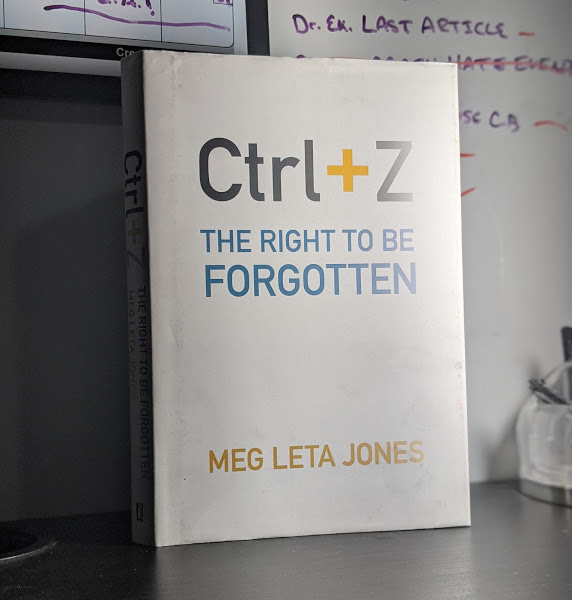
In this podcast, Wayne State seniors Omar Abdel-Baqui and Cameron Sanders review the informative novel, “Ctrl + Z The Right to Be Forgotten” by Meg Leta Jones, Associate Professor in the Communication, Culture & Technology Department at Georgetown University.
The novel explores the “right to be forgotten”, or the moral and ethical concerns regarding an individual’s autonomy in regards to their own digital foot print. The book makes a point to differentiate the approaches to this right by different countries and their subsequent legal system.
The first two chapters of the novel specifically explore the differences in the European Union (EU) and United States approach to viewing digital autonomy and their formulation of legal precedencies. Jones does this by reviewing the cases of individuals and situations that deal with the topic.
It seems like in the novel, Jones tries to emphasize the progressiveness of the EU’s attitudes towards the right of digital autonomy in this “New Digital Age”
“Many national legal systems in Europe embrace a nation of redemption by which an individual may preclude another from identifying him or her in relation to his or her past,” writes Jones.
In the podcast, Cameron expresses how fitting of an introduction this is to the rest of the book. Because, as you progress through the book it often highlights the differences in public opinion on the subject and the court opinions, which unsurprisingly, drastically differs.
Jones, in the latter half of the novel, identifies the two prominent oppositions to the right to be forgotten. The first being the unforgiving nature of the internet itself, and the second being on transitory nature of online content.
To these Jones suggests an attitude of stewardship, when it comes to managing personal web presence.
“Widespread acceptance of information stewardship, currently practiced only by certain information professionals, may provide the necessary framework to achieve more effective preservation and privacy online,” writes Jones.
In the podcast, Omar states that he primarily agrees with this suggestion, but ultimately has questions about the practicality of its implementation.
If you would like to read more about the “right to be forgotten” check out the following literature:
Delete: The Virtue of Forgetting in the Digital Age (Book)
For additional takes/reviews on “Ctrl + Z The Right to Be Forgotten” check out the following podcasts:
Meg Leta Jones: Ctrl + Z – The Right To Be Forgotten – Ideas Books
Podcast – Book Review of Ctrl+Z: The Right to Be Forgotten – Andrew and Allise
 Cameron Sanders| Journalist